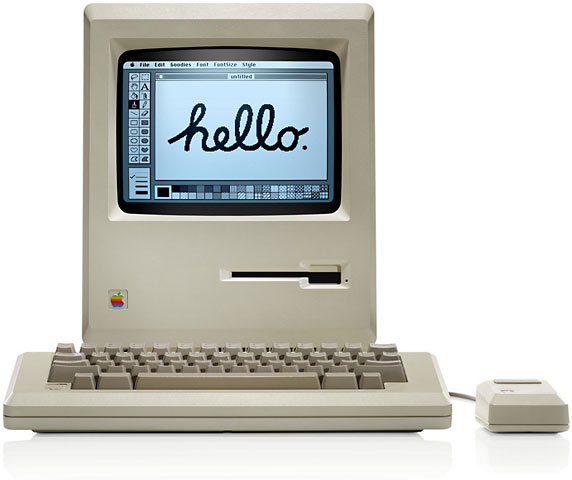
The PC that we use nowadays took multiple years to get to a functioning standard to allow people like me to game. through out the 30 years is took to produce the PC went through a lot of designs from the "Model K" proof of concept for applying Boolean logic to the design of computers, resulting in construction of the relay-based Model I Complex Calculator in 1939. That same year in Germany, engineer Konrad Zuse built his Z2 computer, also using telephone company relays. Later in 1943 Konrad Zuse finishes the Z3, Zuse worked in complete isolation from developments elsewhere, uses 2,300 relays, performs floating point binary arithmetic, and has a 22-bit word length however this piece of kit was destroyed in the Berlin raid so he recreated the Z3 in the 1960's. After successfully demonstrating a proof-of-concept prototype in 1939, Professor John Vincent Atanasoff receives funds to build a full-scale machine. The machine was designed and built by Atanasoff and graduate student Clifford Berry between 1939 and 1942. The ABC was at the center of a patent dispute related to the invention of the computer, which was resolved in 1973 when it was shown that ENIAC co-designer John Mauchly had seen the ABC shortly after it became functional.The title of “first commercially available general-purpose computer” probably goes to Britain’s Ferranti Mark I for its sale of its first Mark I computer to Manchester University. The Mark 1 was a refinement of the experimental Manchester “Baby” and Manchester Mark 1 computers. In 1964 the (CDC) 6600 Supercomputer was introduced and performs up to 3 million instructions per second —three times faster than that of its closest competitor, the IBM 7030 supercomputer. The 6600 retained the distinction of being the fastest computer in the world until surpassed by its successor, the CDC 7600, in 1968. One of the earliest personal computers, the Kenbak-1 is advertised for $750 in Scientific American magazine. Designed by John V. Blankenbaker using standard medium-- and small-scale integrated circuits, the Kenbak-1 relied on switches for input and lights for output from its 256-byte memory. In 1973, after selling only 40 machines, Kenbak Corporation closed its doors. The first advertisement for a microprocessor, the Intel 4004, appears in Electronic News. Developed for Busicom, a Japanese calculator maker, the 4004 had 2250 transistors and could perform up to 90,000 operations per second in four-bit chunks. Federico Faggin led the design and Ted Hoff led the architecture.The first of several personal computers released in 1977, the PET comes fully assembled with either 4 or 8 KB of memory, a built-in cassette tape drive, and a membrane keyboard. The PET was popular with schools and for use as a home computer. It used a MOS Technologies 6502 microprocessor running at 1 MHz. After the success of the PET, Commodore remained a major player in the personal computer market into the 1990s. Apple introduces the Macintosh with a television commercial during the 1984 Super Bowl, which plays on the theme of totalitarianism in George Orwell´s book 1984. After the Release of the Macintosh is when the technology started spike in development from Apple's Newton to sony Vaio series and to our everyday computers and laptops now.

No comments:
Post a Comment